← Back to Fashion WorkF-02 / PRATT INSTITUTE / SEMESTER COLLECTION
METAVERSE
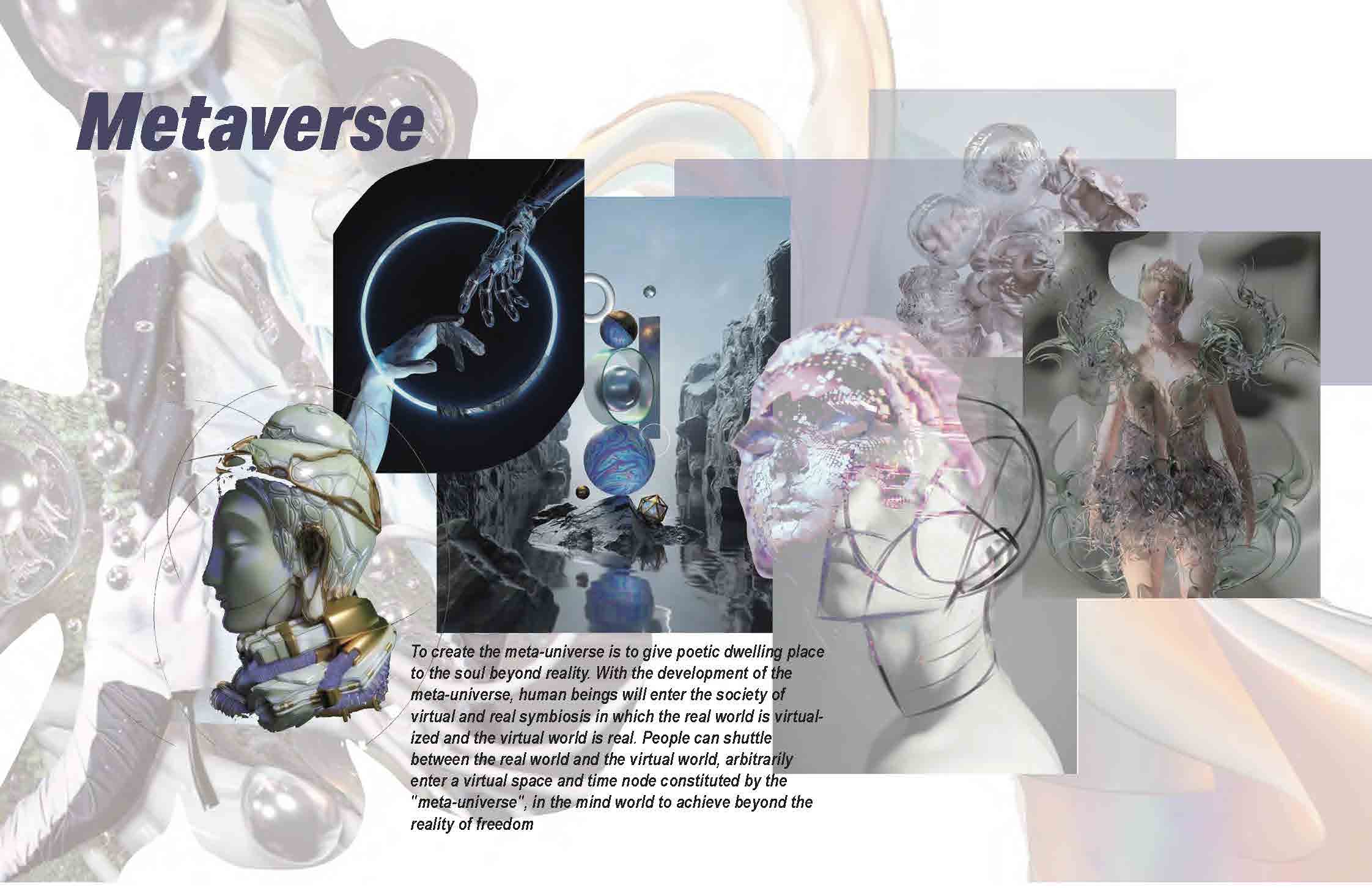
A concept-to-garment project built around one question: what happens to clothing when the body sits between physical and digital space?
A body caught between solid and virtual.
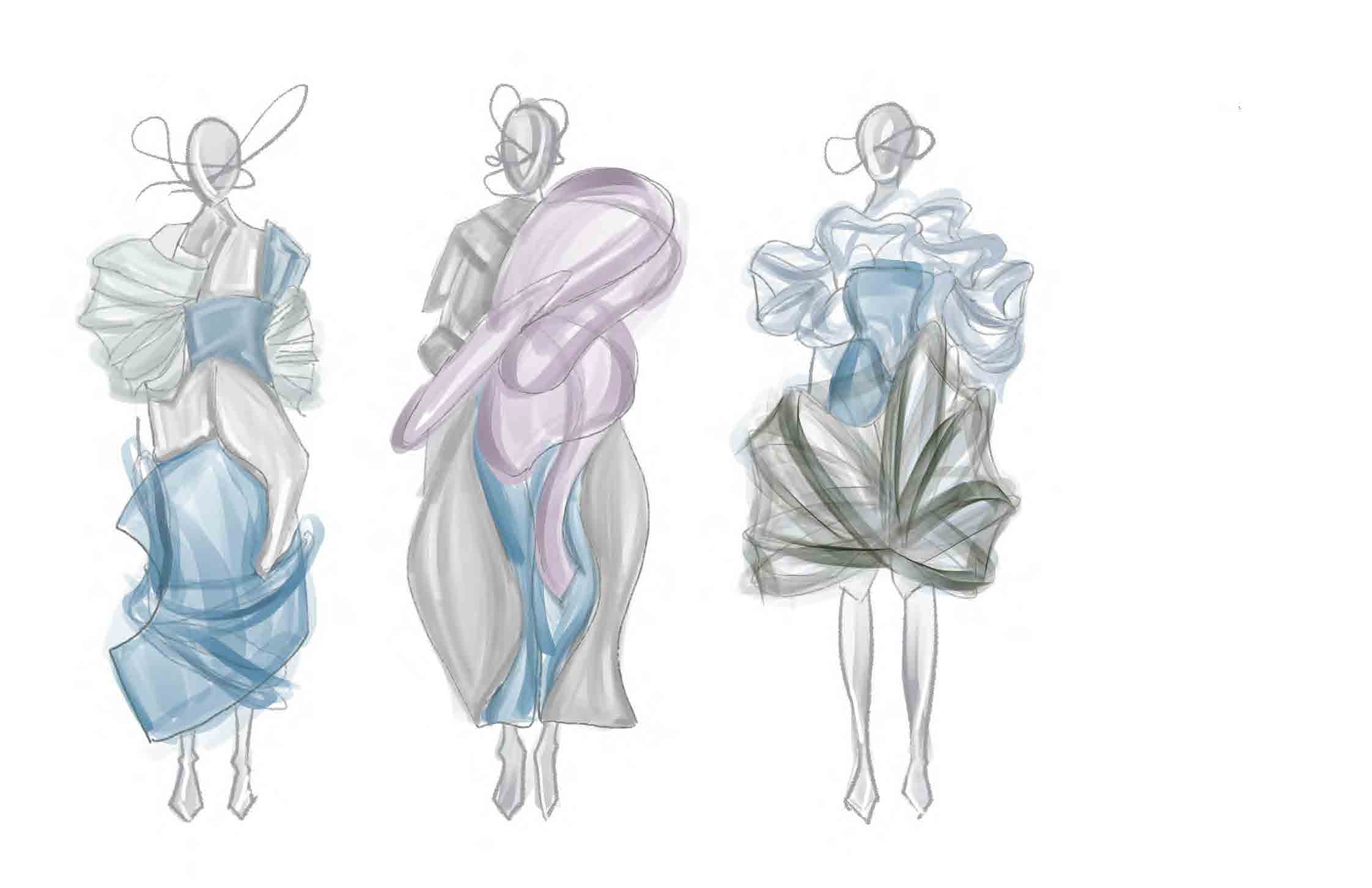
The project began with physical and virtual life starting to overlap. I was less interested in illustrating technology than in finding its physical sensations: transparency, distortion, weightlessness, and forms that seem to hover around the body.
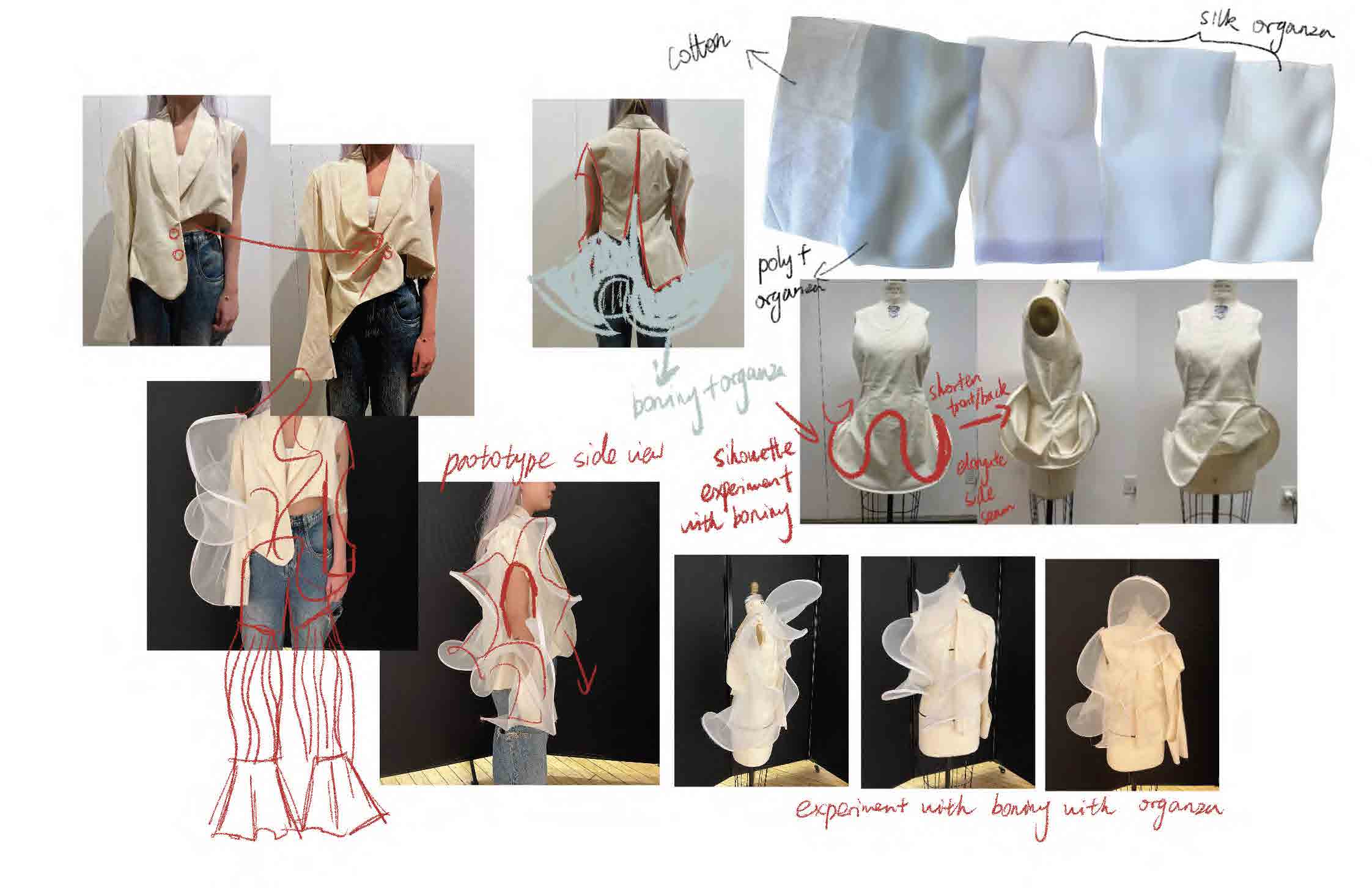
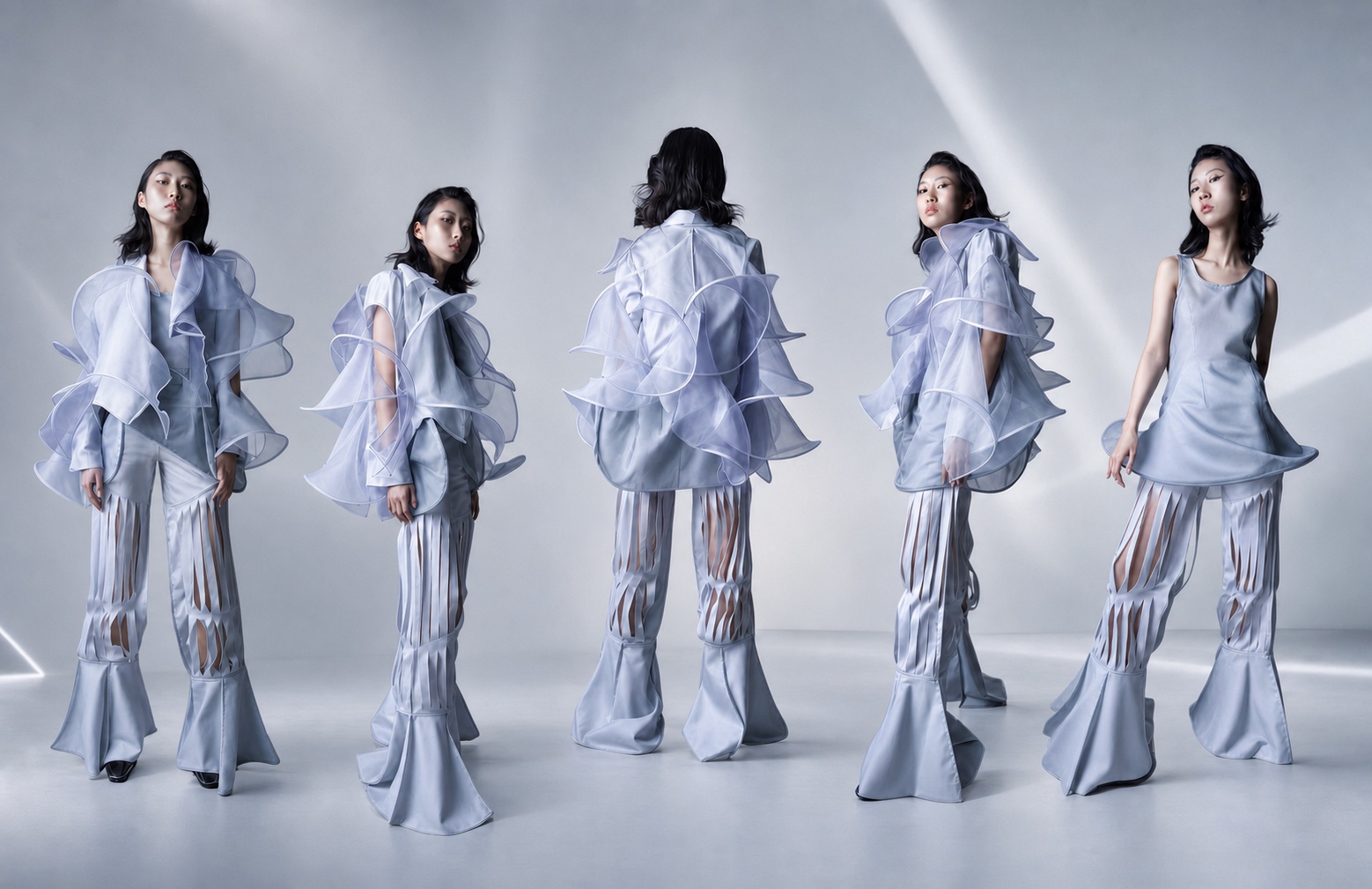
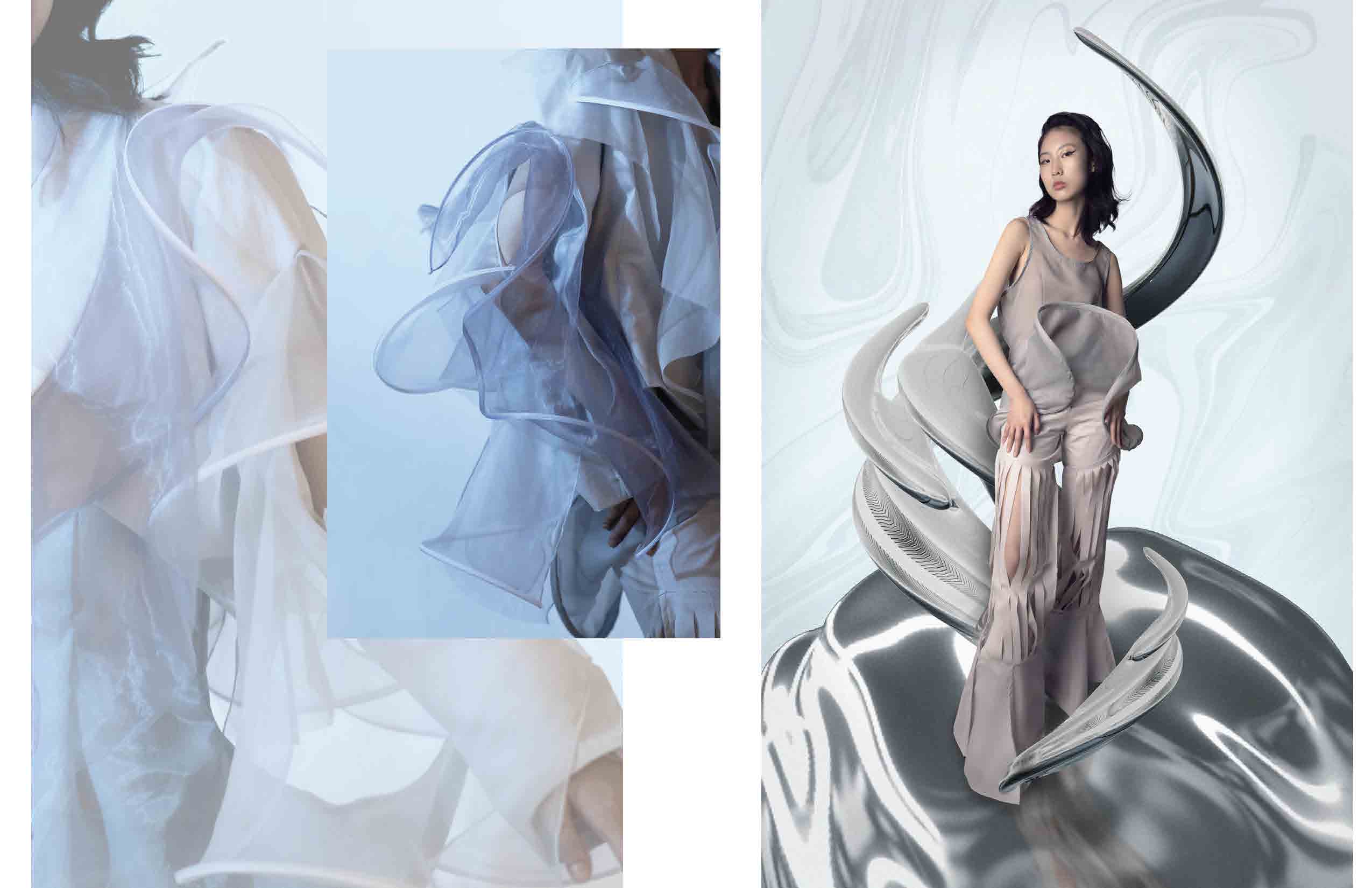
A tailored base keeps the body readable. Translucent organza, curved boning, open cutwork, and inflated volume pull the silhouette past it. The final look stays wearable while never feeling completely fixed.
Make the virtual feel physical.
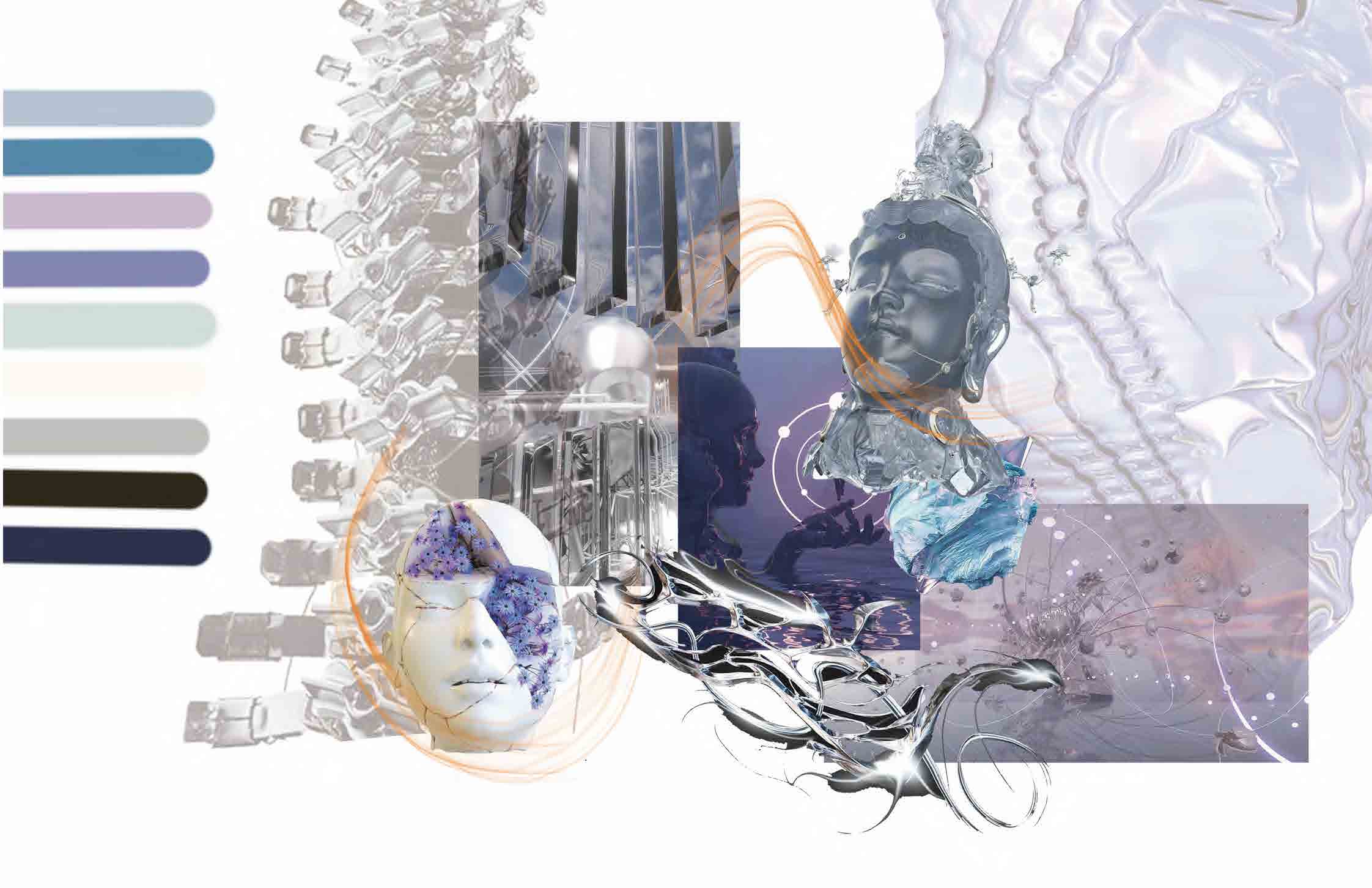
Pale blue, lilac, silver, and washed neutrals came from rendered light and reflective surfaces. Curved lines repeat through the research as a signal moving between two spaces.
The line had to move around the body, not sit on it.
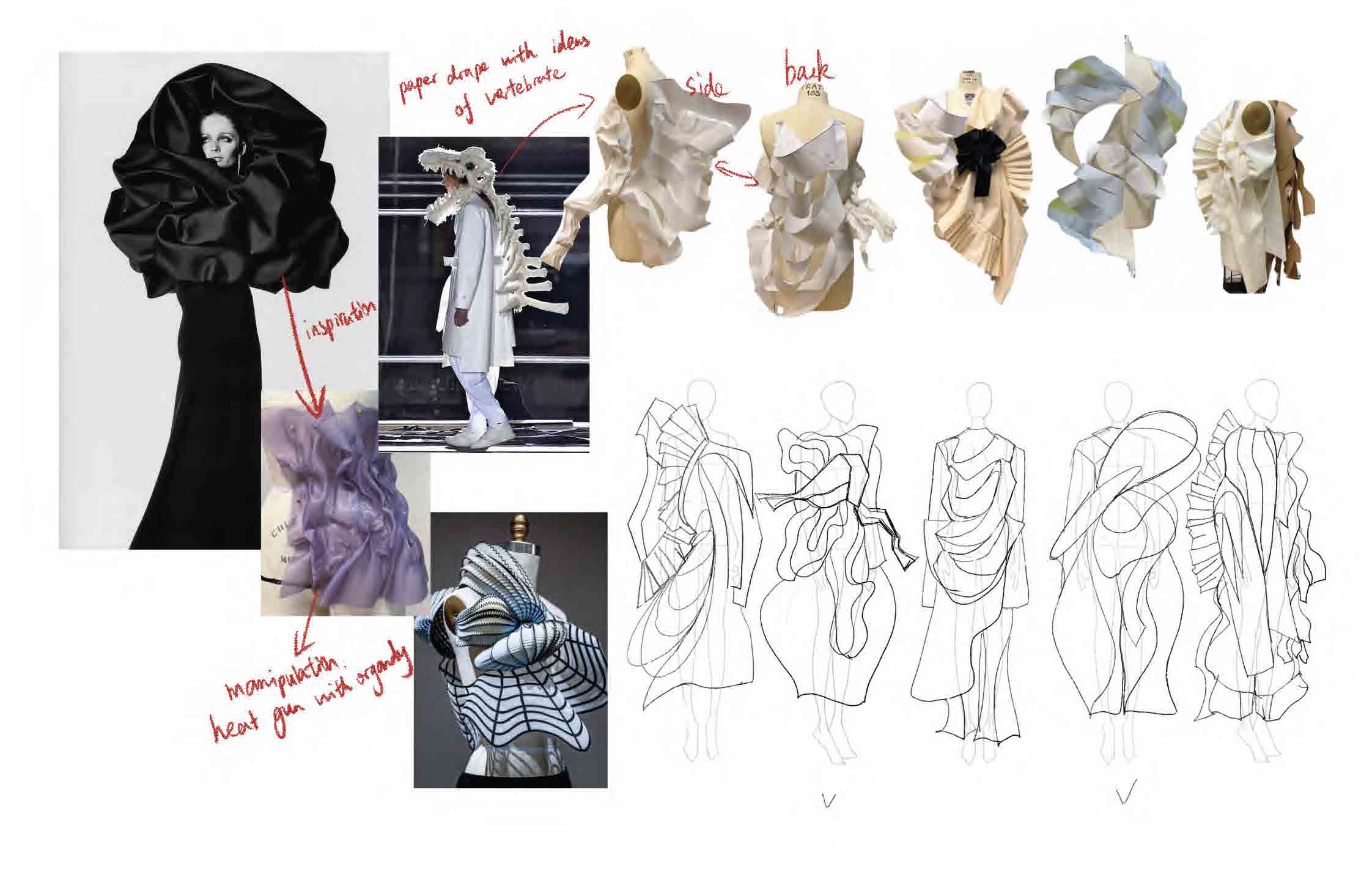
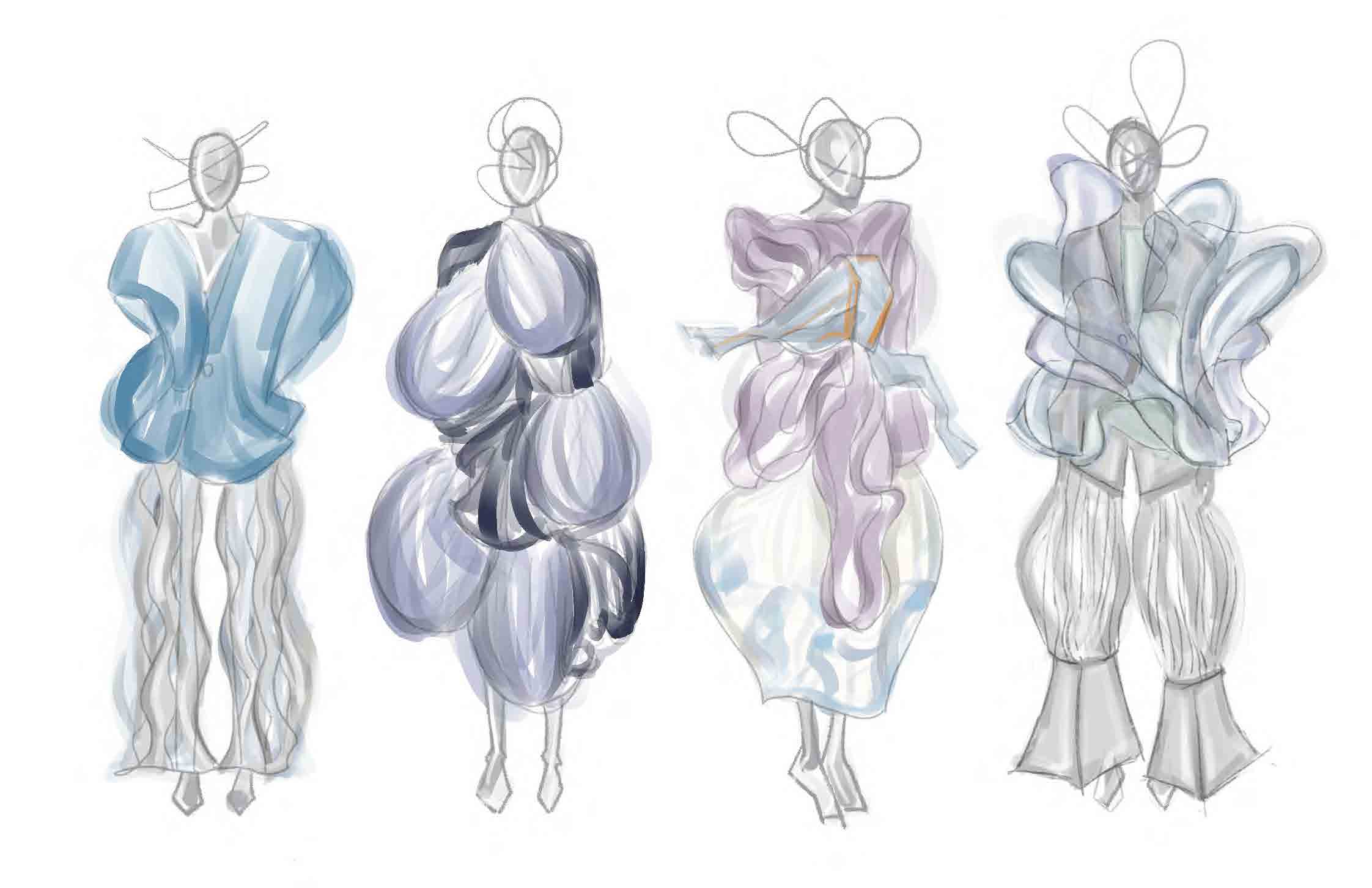
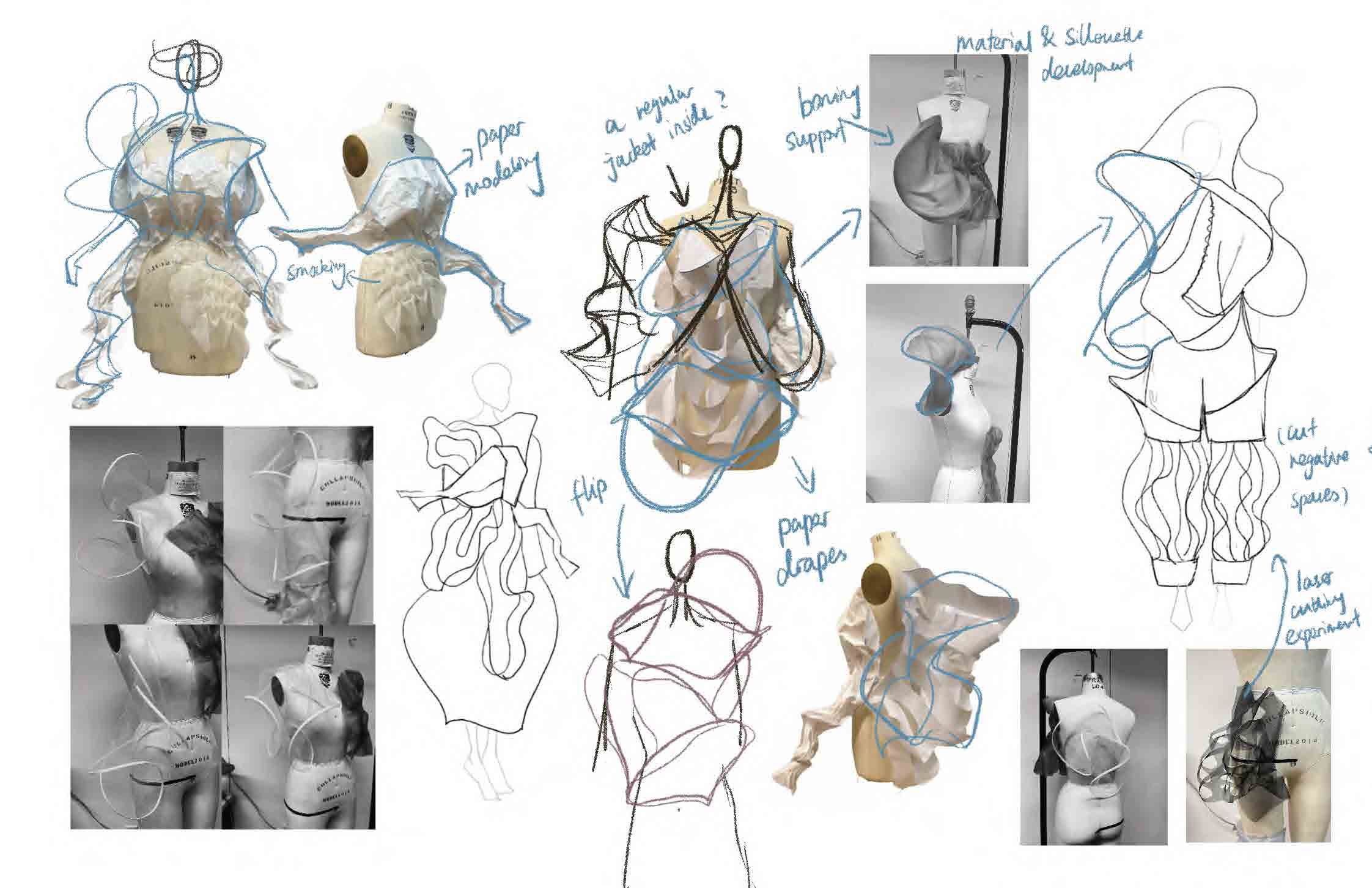
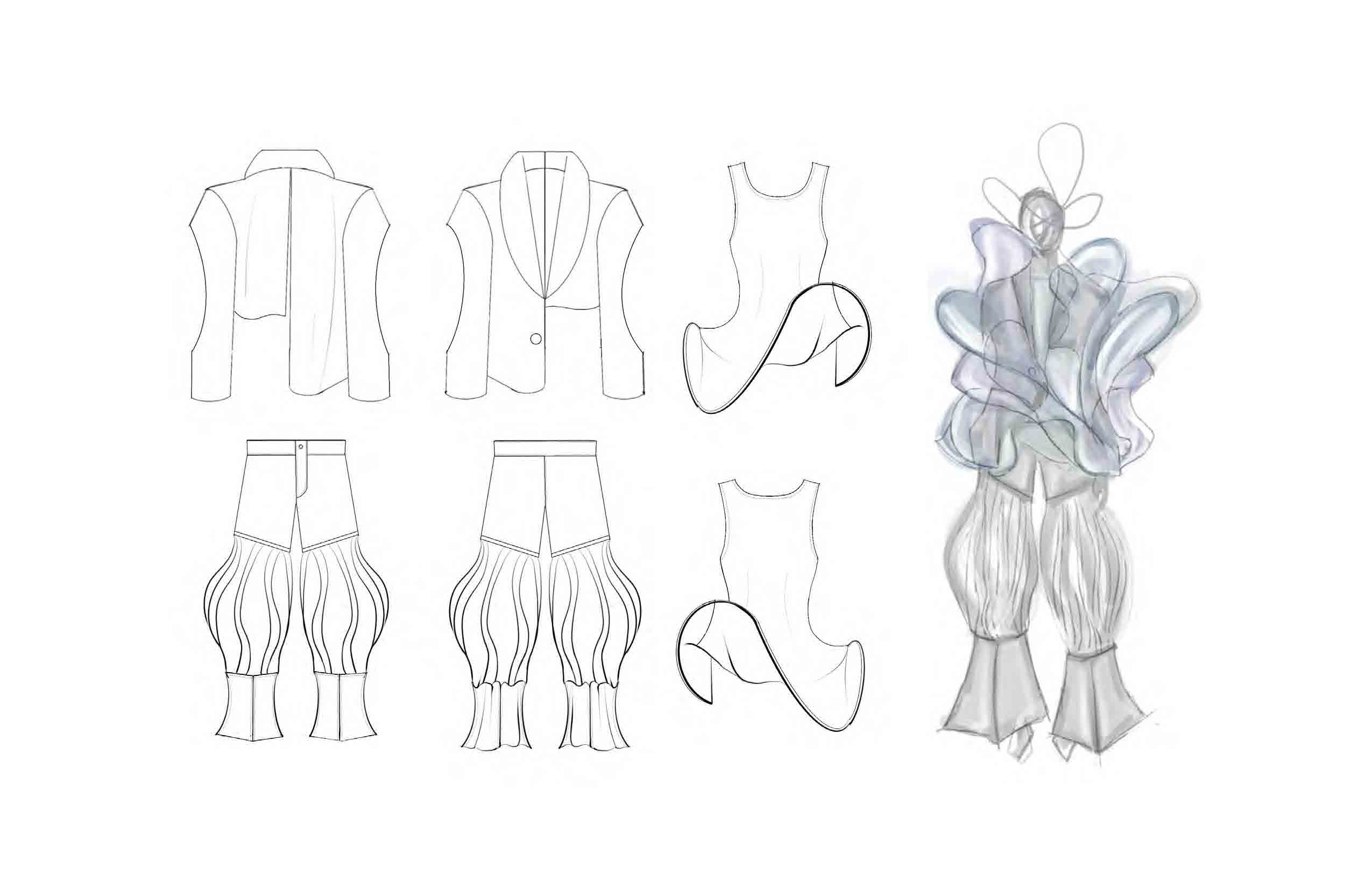
Early silhouettes borrowed from protective shells, irregular loops, and inflated structures. I sketched the volume first, then looked for familiar garment pieces that could hold it: a vest, a simple underlayer, and trousers with a controlled flare.
Silhouette research Open full size ↗Let the material disagree.
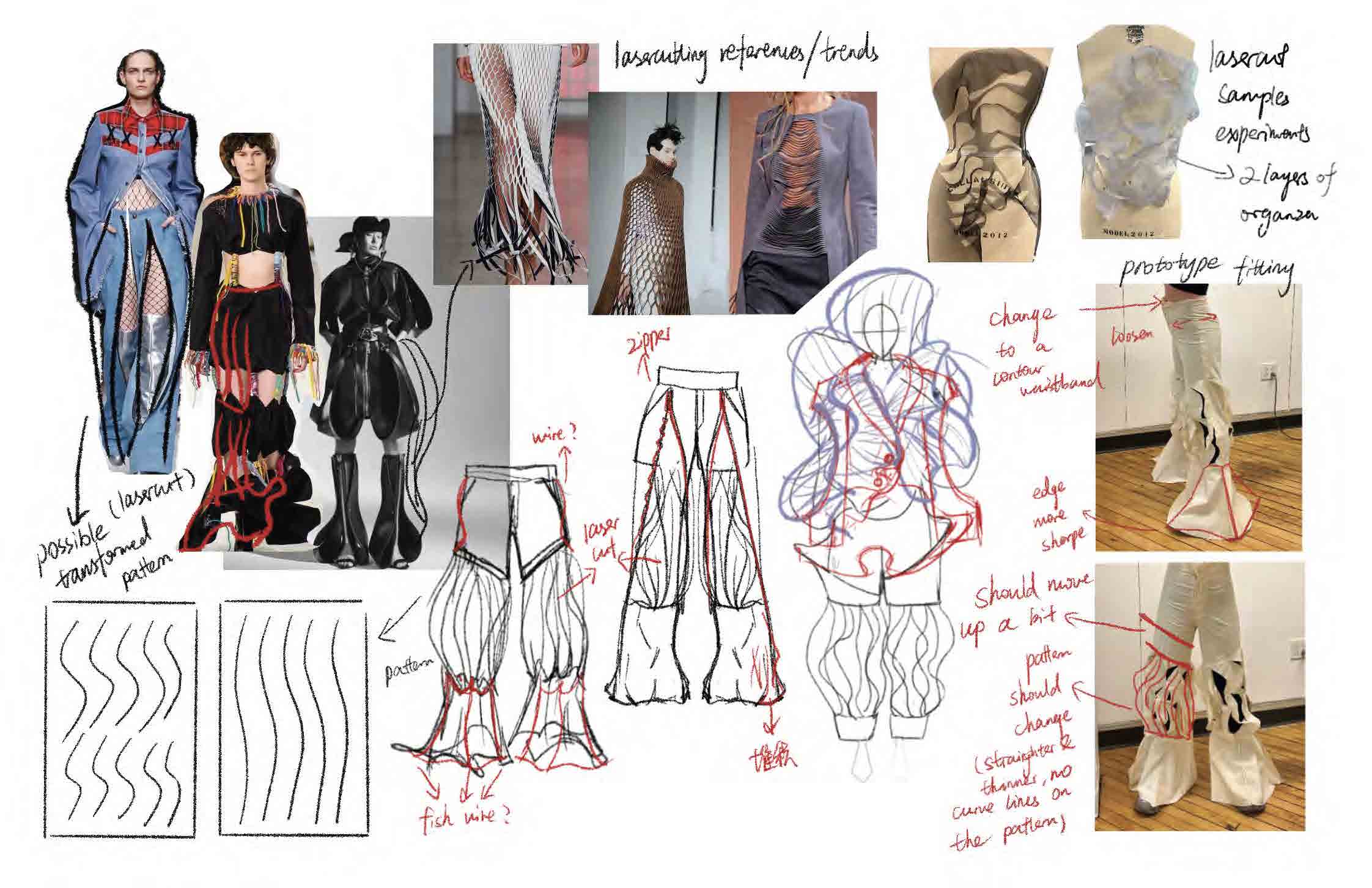
Paper made it fast to test scale. Boning gave the curves memory. Organza softened the structure without hiding it. Each fitting changed where the volume began, how far it sat from the body, and which negative spaces needed to remain open.
The support had to disappear.
The final look depends on internal control. Boning holds the sheer volume away from the body, while a clean tailored layer gives it an anchor. Repeated cut lines continue into the trousers so the upper and lower halves read as one system from every angle.
Technical resolution Open full size ↗
Final look / multiple views Open full size ↗The garment keeps one foot in each world.
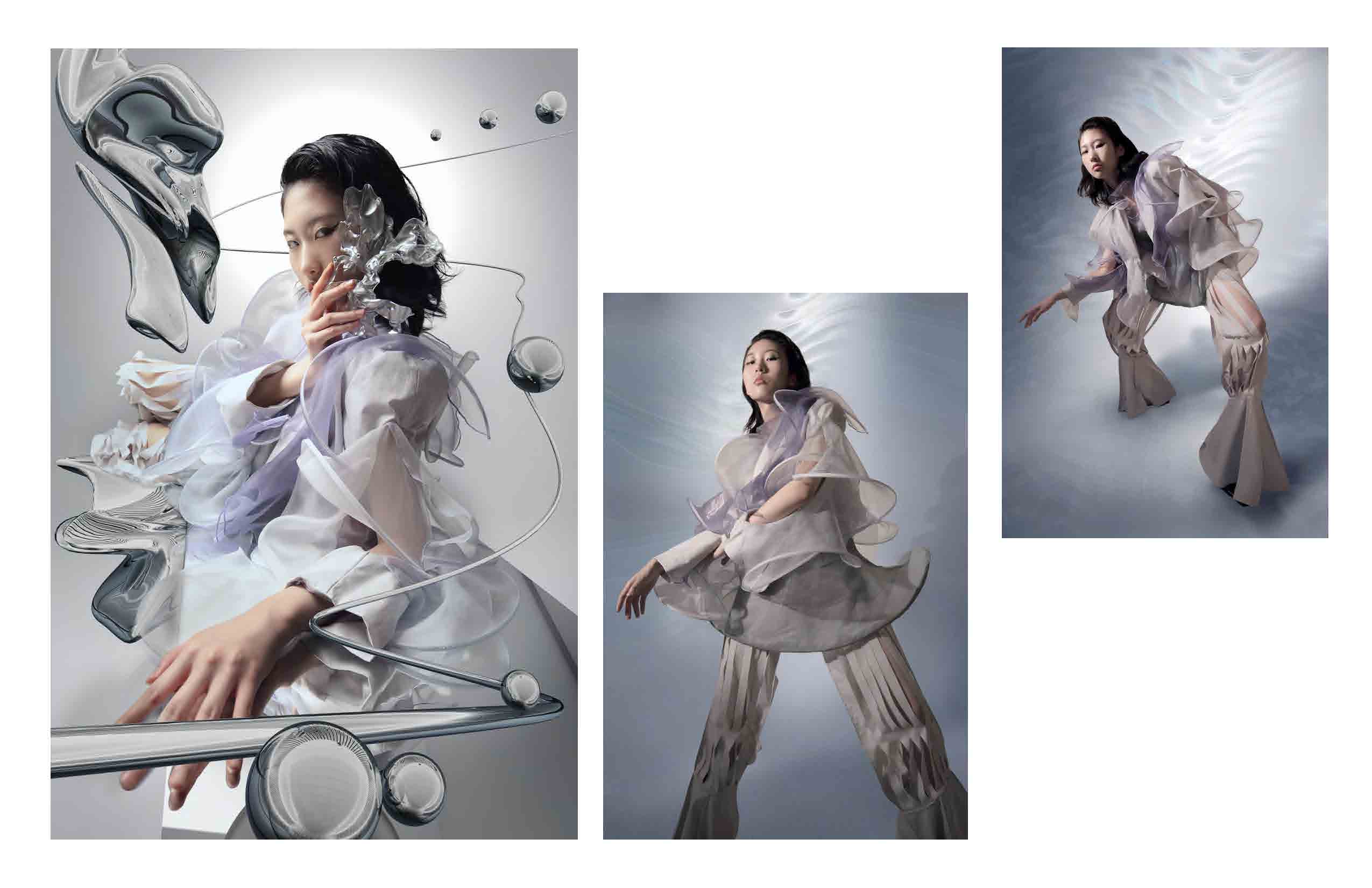
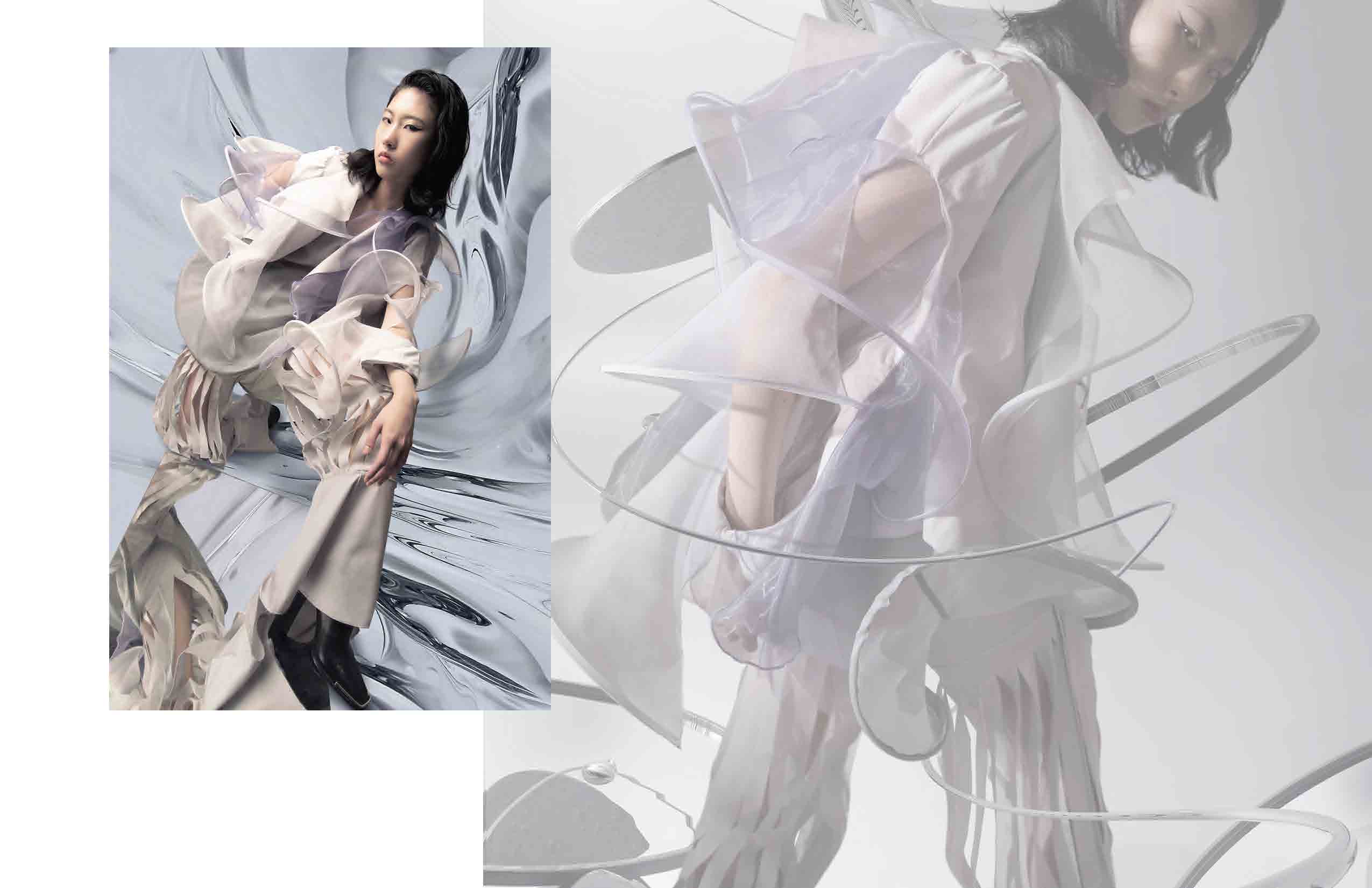
The final images return the finished look to the atmosphere that shaped it: cold light, reflective surfaces, suspended curves, and a body that remains visible inside the distortion.
Digital clothing does not need to look like a screen.
By the end of the semester, the strongest idea was also the simplest: the virtual can enter clothing by changing how fabric occupies space around a real body. The result is light, structured, and slightly unsettled — exactly the tension the project began with.